
Sleep story · Sleep
The Coastal Path
Owen Hale · 29 min
29:00
remaining
What to do, minute by minute
1. Get comfortable
0:00–7:15Dim the lights, put your phone face-down, and lie down as if you were already going to sleep. Nothing here needs your effort.
2. Let the words carry you
7:15–14:30Don't try to follow the story closely. Let the images drift past — half-listening is exactly right.
3. Soften the body
14:30–21:45Unclench your jaw, drop your shoulders into the bed, and let your breathing slow on its own.
4. Drift
21:45–29:00If you fall asleep before the end, the session has done its job. If you're still awake, just keep resting — that counts too.
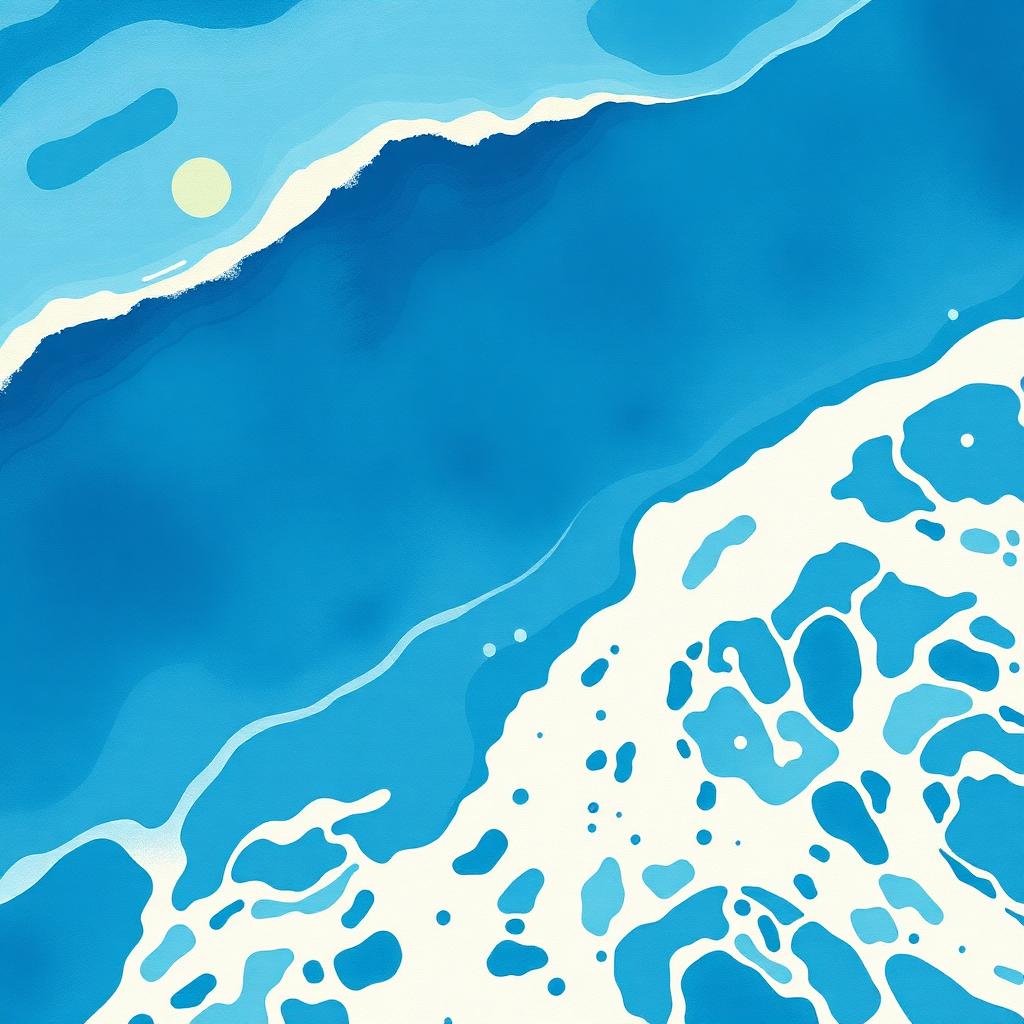
Cliff, gorse, and the sea keeping level with you all afternoon.
Read the full script
By early afternoon, the coastal path is warm beneath a pale, open sky.
It runs along the high edge of the land, where grasses lean toward the sea and the sea keeps level with the walker. Far below, water moves in broad folds of blue and silver. From this height, the waves seem slow. They arrive as thin white lines, soften against the rocks, and disappear.
The path is narrow, but easy to follow. Its surface is firm and dry, pressed smooth by many quiet journeys. Here and there, small pale stones lie among the earth. Their edges have been rounded by weather and time.
On one side, the cliff falls away through shelves of heather and grass. On the other, low banks rise gently, bright with gorse.
The gorse has been flowering for weeks. Yellow blossoms cover the dark green bushes, each one catching the afternoon light. Their color is deep and warm, like sunlight gathered into petals. The branches grow close together, making sheltered hollows where insects drift and settle.
A mild breeze travels over the headland. It bends the longest grasses, then lets them rise. It stirs the gorse and carries its soft, coconut scent across the path.
The walker moves without hurry.
There is nowhere that needs to be reached before evening. The path continues ahead, turning with the shape of the coast. Sometimes it can be seen for a long way. Sometimes it slips behind a rise and vanishes, only to appear again a little farther on.
The sea remains beside it.
It is there beyond every curve, wide and calm, keeping the same steady distance. Darker water lies near the shadow of the cliffs. Farther out, the surface grows lighter, reflecting the high, thin clouds. At the horizon, blue water and blue air meet in a line so soft that it is almost not a line at all.
The afternoon has a gentle rhythm.
Step after step presses quietly into the dusty ground. The breeze comes and goes. The grass bows and lifts. The water below moves toward the shore, then draws back.
A small bird rises from the gorse. It passes over the path with quick wings and settles on a fence post farther ahead. The fence follows the inland side of the trail for a while, its wooden posts faded to silver. Between them, thin wires catch brief threads of light.
The bird watches the open land. Its head turns once toward the sea, then back toward the fields.
Beyond the fence, sheep graze on a broad green slope. They are scattered like pale stones. Some stand with their heads lowered. Others rest in shallow places where the grass is cool. Their wool lifts slightly in the breeze.
No sound reaches the path from them. Only the faint hush of the sea comes up from below.
The walker passes the fence post, and the bird moves on. It flies low above the gorse, following the path for a few moments before dropping out of sight.
Ahead, the trail begins a gradual climb.
The change is almost too slight to notice. The earth rises beneath each step. The horizon lowers a little, and more of the water comes into view. Soon the sea seems immense, stretching outward in every direction the coast allows.
At the top of the rise, a flat stone offers a place to pause.
It is broad enough to sit on, warmed all afternoon by the sun. Fine lines of lichen spread across its surface in gray and green patches. Close by, a few tiny flowers grow between the roots of the grass. Their petals are white, with yellow centers no larger than grains of sand.
The walker sits for a while.
Below, a cove curves into the land. Its beach is made of small stones, each one smoothed by the tide. From above, the shore looks like a ribbon of muted brown and gray. Water slides over it in long, shallow sheets.
A wave reaches the beach.
There is a distant hush.
The water withdraws, turning the stones dark.
Another wave follows.
The sound rises, softens, and fades.
From the headland, each wave seems to take all the time it needs. No wave hurries the next. They arrive one by one, and together, repeating a pattern that never becomes exact.
The walker rests a hand on the warm stone. Its surface is rough in some places and smooth in others. The heat of the afternoon remains held inside it.
Far offshore, a small boat moves across the light.
It is little more than a white mark beneath the horizon. It travels so slowly that for a long moment it appears still. Then its position changes beside a darker patch of water, and a faint wake opens behind it.
The boat continues on. The sea closes softly after it.
After a time, the walker rises and returns to the path.
The trail slopes down from the headland into a shallow valley. Here the wind grows quieter. Taller plants gather on either side, and the warm fragrance of gorse deepens.
Bees move among the blossoms.
Their sound is low and even. One crosses the path, heavy with pollen, and disappears into a bank of yellow flowers. Another circles close to the ground before finding a bloom. They seem untroubled by the passing footsteps.
The sheltered air holds the warmth.
Dry seed heads brush lightly against one another. Ferns unfold in the shade beneath the gorse. The path darkens to a richer brown where the sun reaches it only in broken pieces.
For a while, the sea is hidden.
The land rises between the path and the cliff edge. Yet its presence remains in the air. There is salt in the breeze, and a coolness beneath the warmth. The distant hush continues beyond the bank, steady and low.
The walker follows the curve of the valley.
At its lowest point, a narrow stream crosses beneath the path through a stone channel. The water is clear and shallow. It slips over dark pebbles and gathers briefly in a small pool before continuing toward the cliff.
Moss grows along the channel walls. Tiny leaves crowd near the water, bright and fresh. The stream makes a quiet sound of its own, a soft trickling note beneath the wider murmur of the coast.
A simple wooden bridge passes over it.
The boards are dry and sun-bleached. Each footstep makes a low, hollow sound. On the other side, the trail begins to climb again through the grasses.
The sea slowly returns.
First there is a narrow glimpse of blue between two bushes. Then a brighter patch appears beyond the grass. At last the path reaches the outer slope, and the full breadth of water opens again.
It has been there all along.
The light has changed slightly. Afternoon is moving onward, though there is still plenty of day. The sun sits lower, and its reflection stretches farther across the water. A broad silver path trembles on the surface, widening and narrowing as the waves turn.
The coastal trail keeps close to the cliff now.
The edge is softened by grasses, thrift, and small cushions of heather. Pink flowers cling to the thin soil. Their stems move in the breeze, yet their roots hold firm among the stones.
The walker remains on the worn center of the path, where the ground is level.
Around the next bend stands an old marker post. Its top is rounded by rain, and one side carries a faded streak of blue paint. It points along the coast, though the path itself needs little explanation. There is only the steady line ahead, bending around the headland.
Beyond the post, the gorse grows lower.
Wind has shaped it over many seasons. The bushes slope away from the sea, dense and smooth, as though a patient hand has brushed them in one direction. Yellow flowers remain tucked among the spines, protected from the strongest air.
The breeze feels cooler here.
It moves over the water, up the cliff, and across the path. It lifts the walker’s clothes and passes on toward the inland fields. With it comes the scent of salt, stone, and sun-warmed grass.
Cloud shadows travel over the sea.
One dark shape crosses the bright surface, moving slowly toward the shore. Another forms farther out. Between them, the water gleams.
The walker’s own shadow follows along the path, sometimes short and clear, sometimes blurred by grass. It moves over stones and dry earth. It slides across the roots of gorse and gathers beside the feet whenever the path turns toward the sun.
There is a bench ahead.
It stands where the land widens into a small grassy terrace. The wood is weathered, and the arms are smooth from years of resting hands. It faces the sea.
The walker sits.
From here, the coast can be seen folding into the distance. Headland follows headland, each one paler than the last. The nearest cliffs are gray and brown, marked by narrow ledges. Farther away, their details soften. The final curve is only a blue shape resting in the haze.
Gulls wheel below the level of the bench.
Their white backs flash when they turn. They glide without effort, held by air rising from the cliff. One gives a faint call, and the sound drifts away before another answers.
For several minutes, there is nothing to do but watch.
A gull rises.
A shadow crosses the water.
A wave opens white against the rocks.
The grass whispers behind the bench.
Everything moves, yet the headland feels still.
The walker leans back against the warm wood. The body grows quiet after the long, easy miles. Shoulders settle. Hands rest loosely. The gaze can remain on the horizon without searching for anything.
A few thin clouds stretch above the sea. Their undersides carry a soft gray color. Around their edges, sunlight makes them almost white.
The small boat is no longer visible.
Perhaps it has gone beyond the next headland. Perhaps it remains somewhere within the brightness. The empty water seems no different without it. The sea simply continues, wide and level, holding light from one horizon to the other.
At last, the walker leaves the bench.
The path now turns inland for a little way. It crosses a field through a wooden gate, then follows a low stone wall. The gate swings easily and settles back with a muted click.
On the inland side, the grass is thick and green. Clover grows close to the ground. Buttercups shine in scattered groups, their small yellow faces reflecting the sun.
The stone wall is built from pieces of local rock. Some are broad and flat. Others are narrow, fitted carefully into gaps. No mortar holds them together. Their weight and shape are enough.
Plants have found places between the stones.
Soft moss fills the shaded spaces. Small ferns grow from deeper cracks. A snail shell rests in a hollow, pale and empty, its spiral dusted with earth.
The wall guides the walker across the field and back toward the coast.
At the far gate, the sound of the sea becomes clearer again. The path passes through a narrow opening and returns to the cliff top.
Here, the land is gentler.
The cliffs slope down in long green folds instead of dropping steeply. Sheep tracks make faint parallel lines across the hillside. A patch of bracken glows coppery at the edges where the sunlight touches it.
The main path descends with the slope.
Each turn reveals the cove below from a different angle. At first, only the outer rocks can be seen. Then the whole curve of the beach appears, sheltered between two grassy arms of land.
The tide is lower here.
Dark rocks rise from the shallow water. Pools remain between them, smooth as glass. Ribbons of seaweed lie across the wet stone, brown and olive, shining in the afternoon light.
The walker does not go all the way down to the beach.
The path stays above it, moving around the cove through a band of gorse. The flowers are fewer in this sheltered place, but the leaves are rich and dark. Long grasses grow through the bushes, their feathery tips bright against the shade.
Across the water, the opposite headland waits in sunlight.
The trail can be seen climbing there, a pale thread on the green slope. It disappears at the top beside a cluster of wind-bent shrubs.
The walker follows the cove around.
The stream from the earlier valley reaches the beach below. It winds across the stones in a silver line, spreading into little channels before meeting the tide. From this distance, it seems almost still.
The air is quieter inside the curve of the land.
Waves enter the cove with less force. They fold over gently, leaving a border of foam that thins and vanishes. The pebbles give a faint, rolling murmur as water moves among them.
The path begins another climb.
It takes its time, crossing the slope in long, easy turns. A few flat stones form natural steps. Grass grows between them, softening their edges.
The walker climbs steadily, pausing now and then to look back.
With each pause, the cove appears smaller and more complete. The beach becomes a narrow crescent. The stream becomes a glint. The gorse forms a dark green border along the land.
At the top, the breeze returns.
It crosses the headland in a cool, clean sweep. The sea opens once more, its surface now touched with warmer color. Silver has begun to soften toward gold.
Late afternoon settles over the coast.
The shadows of the gorse stretch across the path. Every branch makes a fine pattern on the earth. The grass on the cliff edge glows pale at the tips, and the stones hold small pools of amber light.
The walker continues.
There is still no hurry.
The path passes a round stone shelter built low against the wind. Its walls rise only to shoulder height. Inside, the air is calm. A wooden seat curves along the inner wall, facing a gap that frames the sea.
The walker steps into the shelter and sits once more.
The quiet here is deep, but not empty.
Wind brushes the outer stones. Grass moves above the wall. Somewhere nearby, a cricket makes a small, regular sound. Below all of it, the sea breathes against the coast.
The stones of the shelter have gathered warmth. Their rough surfaces smell faintly of dust and lichen. A strand of dried grass rests on the seat, trembling whenever a thread of breeze finds its way inside.
Through the opening, the water looks smooth.
The nearest waves are hidden by the cliff. Only the wide outer sea is visible, gently rising toward the horizon. Light spreads across it in a long, calm band.
The walker remains there as the afternoon grows softer.
Nothing asks for attention.
Thoughts come and go as easily as the gulls. One appears, circles for a while, and passes beyond the headland. Another follows and fades into the bright distance.
The body rests against the curved seat.
Feet are still after walking. Hands lie warm and loose. The steady air moves over the top of the shelter, while inside there is only the faintest stirring.
After some time, the walker stands and returns to the trail.
The last part of the afternoon lies ahead.
The path runs almost level now, following the long rim of the land. Gorse gives way to heather, and the heather spreads in low purple-brown patches between the grasses. Small stones mark the way.
The sea keeps pace.
When the path bends inland, the water seems to wait beyond the grass. When the path curves outward, it comes close again, filling the view. Always it remains beside the journey, neither approaching nor falling behind.
Step by step, the coast unfolds.
A weathered post.
A patch of yellow gorse.
A hollow filled with ferns.
A pale feather caught in the grass.
A stone warmed by sun.
Each passes quietly, leaving no need to remember it.
The light grows lower, and the colors become muted. Green slopes deepen. Gray rocks take on a faint blue tone. The yellow gorse no longer shines so brightly, but holds a darker warmth within its flowers.
The breeze slows.
Grasses that have leaned all day begin to rest more upright. Insects settle among the stems. The gulls fly farther out, their calls rare and distant.
Ahead, a final rise rounds gently against the sky.
The walker follows the path upward. The ground is soft with fine dust. Footsteps make almost no sound.
At the crest, a wide meadow reaches toward the cliff. The grass is short and smooth, with a few low mounds where rabbits have made their hidden ways. Beyond it, the sea lies calm beneath the lowering sun.
The walker crosses the meadow.
Each step is easy.
The air has cooled, but the day’s warmth remains in the ground. It rises faintly through the soles of the shoes. The scent of grass is stronger now, mixed with the last sweetness of gorse.
Near the far side stands a single hawthorn tree.
It is small and shaped by the wind, its branches leaning inland. Leaves cluster densely around its trunk, making a sheltered space beneath them. The path curves past the tree and continues along the edge.
The walker pauses there.
Through the branches, the sea is divided into quiet pieces of blue and gold. Leaves shift. Light appears and disappears. Far below, a wave turns over with a white edge and is gone.
The afternoon is nearly evening, though the sky remains bright.
There will be more path beyond this place. More grass, more gorse, more coves folding into the land. But for now, the walker stays beside the hawthorn and watches the water keep its level.
The horizon is steady.
The breeze becomes a slow breath through the leaves.
The sea answers against the rocks.
One soft sound follows another.
The branches settle.
The grass settles.
The long path fades into the gentler light, curving onward beside the quiet water, while the walker rests in the shelter of the tree and the coast continues, calm and unbroken, around another green headland, beyond another field of gorse, into the soft blue distance where the waves rise and fall, rise and fall, beneath the slowly deepening sky...