
Meditation · Sleep
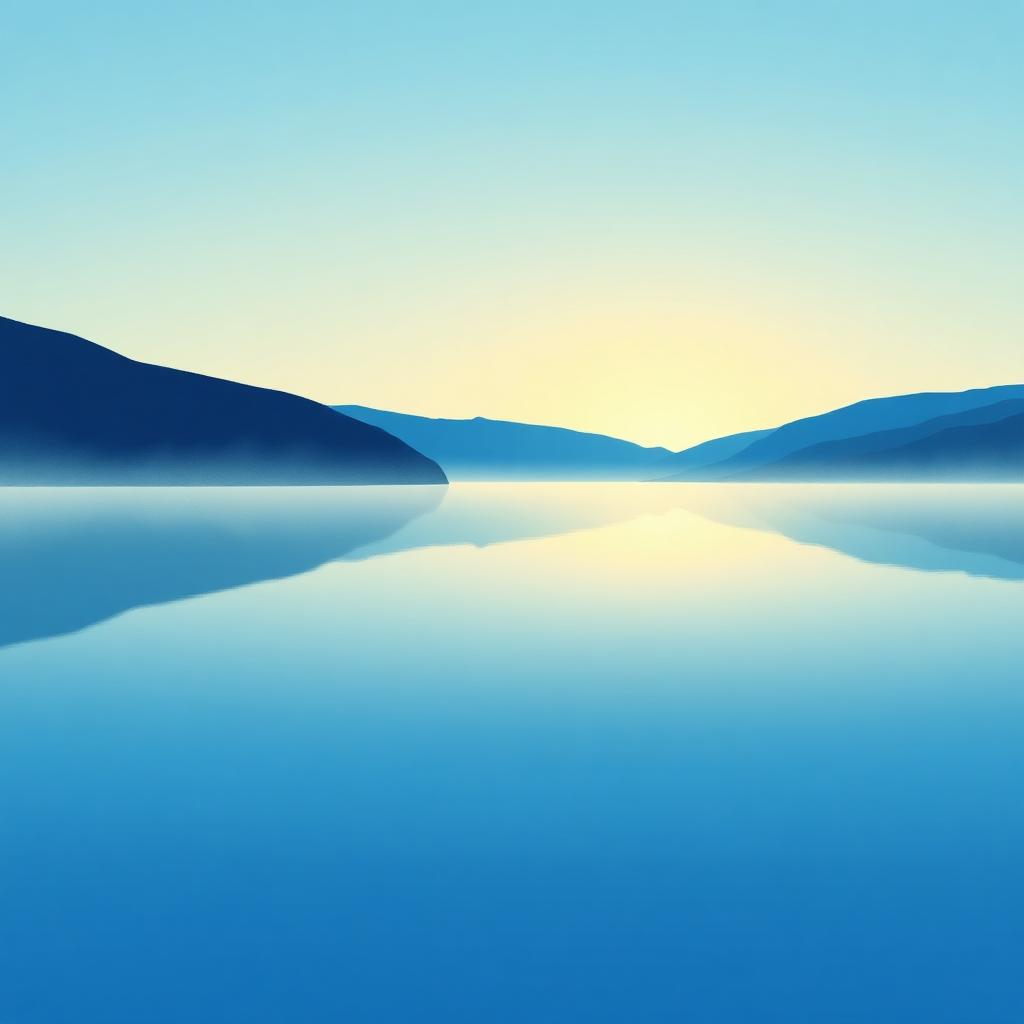
The Lake at Dusk
Elena Marsh · 15 min
15:00
remaining
What to do, minute by minute
1. Settle in
0:00–3:00Sit or lie down somewhere you won't be disturbed. Let your shoulders drop, close your eyes or soften your gaze, and take three slow breaths.
2. Follow the breath
3:00–6:00Breathe in for a count of four, out for a count of six. Let the out-breath be longer than the in-breath — that's what calms the nervous system.
3. Scan and release
6:00–9:00Move your attention slowly from your jaw to your shoulders, hands, belly and legs. Wherever you find tension, breathe into it and let it go.
4. Rest in stillness
9:00–12:00Stop steering. Let thoughts come and go like passing traffic — when you notice you've wandered off, that noticing is the practice. Return to the breath.
5. Come back gently
12:00–15:00Deepen your breath, wiggle your fingers and toes, and open your eyes slowly. Carry a little of this quiet into whatever comes next.
A visual meditation that grows darker and quieter as it goes.
Read the full script
Settle into a position that feels comfortable for sleep.
Let your head rest fully. Allow your shoulders to be supported. Let your arms lie wherever they fall naturally, with your hands soft and open.
Stretch your legs out, or bend them slightly if that feels better. Make any small adjustments now. Shift the pillow. Smooth the blanket. Release anything tight around your waist or neck.
Then let yourself become still.
Close your eyes if that is comfortable.
Notice the places where your body meets the bed. Feel the weight of your head. The weight of your shoulders. The gentle heaviness of your back, hips, and legs.
You do not need to hold yourself up.
The surface beneath you is carrying your weight.
Take a slow breath in through your nose.
Let the breath leave through your mouth, easy and unforced.
Again, breathe in gently.
And breathe out, allowing your jaw to loosen.
One more soft breath in.
And a long, quiet breath out.
Now let your breathing find its own pace. There is no need to make each breath deep. Let it be small if it wants to be small. Let it be light and natural.
Bring your attention to your forehead. Notice any tension there. Imagine the skin across your forehead becoming smooth.
Soften the space around your eyes.
Let your eyelids rest heavily.
Unclench your teeth. Let your tongue settle in the bottom of your mouth.
Feel the back of your neck release into the pillow.
Let that softness move down through your shoulders. Down your arms. Through your wrists, palms, and fingers.
With each breath out, allow a little more weight to settle.
If your mind begins to wander, that is normal. You do not need to clear it or make it quiet. Simply notice where it has gone, and return to the feeling of your body resting.
Now imagine that you are beside a calm lake at dusk.
You are resting on a smooth wooden platform near the water. The wood beneath you is warm from the day, though the evening air is beginning to cool.
The lake stretches out before you.
Its surface is wide and nearly still.
Far across the water, low hills form a soft line against the sky. Above them, the last light of day lingers in gentle shades of pale gold, faded rose, and muted blue.
Nothing asks for your attention.
There is nowhere to go.
You simply rest beside the water as evening slowly gathers.
Feel the air touch your face. It is cool, but not cold. It moves lightly across your forehead and cheeks, then becomes still again.
Breathe in, noticing the quiet freshness of the air.
Breathe out, letting your body sink deeper into support.
Near the shore, small reeds stand at the edge of the lake. Their narrow leaves barely move. From time to time, a faint breeze passes through them, making a soft, dry whisper.
Then the reeds become still.
The water becomes still.
And you become a little more still.
Notice the rhythm of your breath.
As you breathe in, imagine the lake receiving the remaining light.
As you breathe out, imagine the surface smoothing from shore to shore.
Inhaling, a faint glow rests upon the water.
Exhaling, the glow softens and spreads.
There is nothing you need to picture perfectly. A color, a shape, or a simple sense of open water is enough. If the image fades, return to the feeling of breathing and resting.
The sky grows slightly darker now.
The gold near the horizon dims. The rose becomes a quiet grey. Blue deepens above the distant hills.
The lake reflects each change without effort.
It does not hold on to the earlier light.
It simply receives the evening as it comes.
Let your body do the same.
Feel your chest rise gently.
Feel it fall.
Let your belly soften as the breath moves out.
Allow your hips to grow heavy.
Let the muscles of your thighs release.
Soften your knees.
Let your calves rest.
Allow your ankles, heels, and toes to become loose and quiet.
Your whole body is resting now, from the top of your head to the ends of your toes.
Perhaps you notice a place that still feels tense. You do not need to force it to relax. Breathe gently around that area. Give it space. Let it soften in its own time.
Across the lake, the hills are becoming darker shapes.
Their details begin to disappear. Trees blend into shadow. Paths and stones can no longer be seen. The distant shore becomes one calm, unbroken line.
The fading of detail asks less of your eyes.
You no longer need to look closely.
You no longer need to name what you see.
There is only the darkening hill, the open sky, and the broad, quiet water.
A small ripple moves near the shore.
It widens into a circle.
The circle grows softer as it travels.
Then it disappears into the smooth surface.
A thought may arise in the same way.
It appears.
It moves through your mind.
It fades.
You do not need to follow it.
If another thought comes, let it make its own widening circle. Let it pass without resistance. Return to the steady lake and the simple movement of your breath.
The evening deepens.
The air is quieter now.
The reeds are almost motionless. The breeze has settled. The water makes only the faintest sound where it meets the edge of the platform.
A soft touch.
A pause.
Another soft touch.
A pause.
Your breath has its own gentle pattern.
A breath in.
A breath out.
A quiet space before the next breath begins.
Let the spaces be natural. Do not hold your breath. Simply notice how each breath arrives on its own, and how each breath leaves.
The last color near the horizon is fading.
The sky shifts from deep blue to a darker blue. The lake below reflects the same shade, until sky and water seem almost joined.
The distant hills are now soft shadows between them.
You may imagine one early star appearing overhead.
A small point of light.
It does not brighten the whole sky. It simply rests there, steady and far away.
You do not need to keep watching it.
Let the image blur at the edges.
Let the lake become less distinct.
Let the shoreline fade.
Your attention can become softer now.
Instead of focusing on one thing, notice the whole field of quiet at once. The dark water. The darker hills. The cool air. The weight of your body. The easy breath.
Nothing needs to be sharp or clear.
If you lose track of the lake, that is all right.
If you drift into thoughts, that is all right.
Each time you notice, return gently to one simple sensation. The weight of your head on the pillow. The warmth of the blanket. The breath leaving your nose.
Then allow even that sensation to soften.
The wooden platform beneath you holds the last trace of daytime warmth. Above it, the night air settles slowly, layer by layer.
The lake seems darker now, like a wide piece of smooth fabric spread beneath the sky.
A few faint reflections tremble and disappear.
The reeds at the edge are only slim shadows.
The far shore is barely visible.
There is less to see.
Less to follow.
Less to do.
Let your forehead stay smooth.
Let your eyes rest deeply.
Let the muscles around your mouth grow slack.
Your shoulders are heavy.
Your hands are quiet.
Your belly is soft.
Your legs are supported.
Your feet need not move.
Breathe in gently.
Breathe out more slowly.
Again, a quiet breath in.
And an easy breath out.
Now release any effort to guide the breath. Let your body breathe for you.
The lake remains calm without your attention.
The sky continues to darken without your help.
You are free to drift.
Sounds around you may come and go. Let them belong to the edges of the evening. They do not need to disturb the calm center of your rest.
Thoughts may come and go as well. They are faint ripples in distant water. There is no need to count them, answer them, or finish them.
Everything can remain unfinished for now.
The night is darker.
The water is quieter.
The space between one moment and the next feels wider.
Imagine the last faint outline of the hills dissolving into the sky. Imagine the lake becoming a deep, soft darkness, smooth and open.
The little star is still there, though you no longer need to look toward it.
Your awareness can dim like the evening light.
Soft at the edges.
Quiet in the center.
Drifting without direction.
Feel one last gentle breath move in.
Feel it leave.
Then allow the next breath to be even easier.
The water rests.
The reeds rest.
The distant shore rests beneath the dark sky.
And you remain here, warm and supported, as the lake grows darker, and the night grows quieter, and every small ripple fades into the deep, still water.